A Homeowner Guide to Cutting Waste Without a Brown Lawn
How much water sprinklers actually use
Conventional in-ground sprinkler systems run between 8 and 16 gallons per minute per zone, depending on the heads, the spacing, and the water pressure. A typical residential zone with six to ten spray heads uses around 12–15 GPM. Across a 15-minute cycle, that's 180–225 gallons per zone. Run six zones three times a week through July and August, and the system is using 7,000–10,000 gallons a week.
That's not unusual. The EPA's WaterSense program estimates outdoor water use accounts for around 30% of an average household's water bill — and 60% or more in hot, dry regions. The same data finds as much as half of that outdoor water is wasted: evaporation, runoff, wind drift, or watering surfaces that don't need water.
How much water do sprinklers use that actually reaches the lawn? On a well-designed system, most of it. On a poorly designed or aging one, sometimes less than half.
Why the numbers run high
The single biggest driver is coverage. Traditional sprinklers throw water in fixed arcs and depend on the same ground getting watered twice. When that overlap breaks down — heads shift, nozzles wear, pressure drops — homeowners add minutes to compensate. The dry spot stays dry, and the rest of the lawn gets soaked. Add a midday run that loses 20–30% to evaporation, and a daily shallow schedule that keeps roots near the surface, and weekly use climbs fast.
Common misconceptions that cost gallons
"Running longer makes the lawn greener." Past a point, extra runtime pushes water past the root zone. Brown patches usually mean uneven coverage, not insufficient duration.
"All sprinklers use roughly the same amount of water." They don't. A misting nozzle can use twice the water of a rotor head for the same coverage — the answer to how much water do sprinklers use depends heavily on head type and layout.
"Smart controllers fix waste on their own." They help (10–20% from rain skips and seasonal adjustments) but can't fix bad coverage.
"Watering every day is best." For an established lawn, daily watering is one of the most common ways to waste water. Two or three deep cycles a week usually outperform it.
Practical steps that don't brown the lawn
Run a meter check. Note the meter reading before and after a full cycle. The difference is what one cycle costs in gallons.
Shift to morning. Start cycles between 4 and 8 a.m. — cooler air and less wind mean more water lands where it should.
Water deeper, less often. Two or three longer cycles a week outperform daily shallow watering, except on new sod.
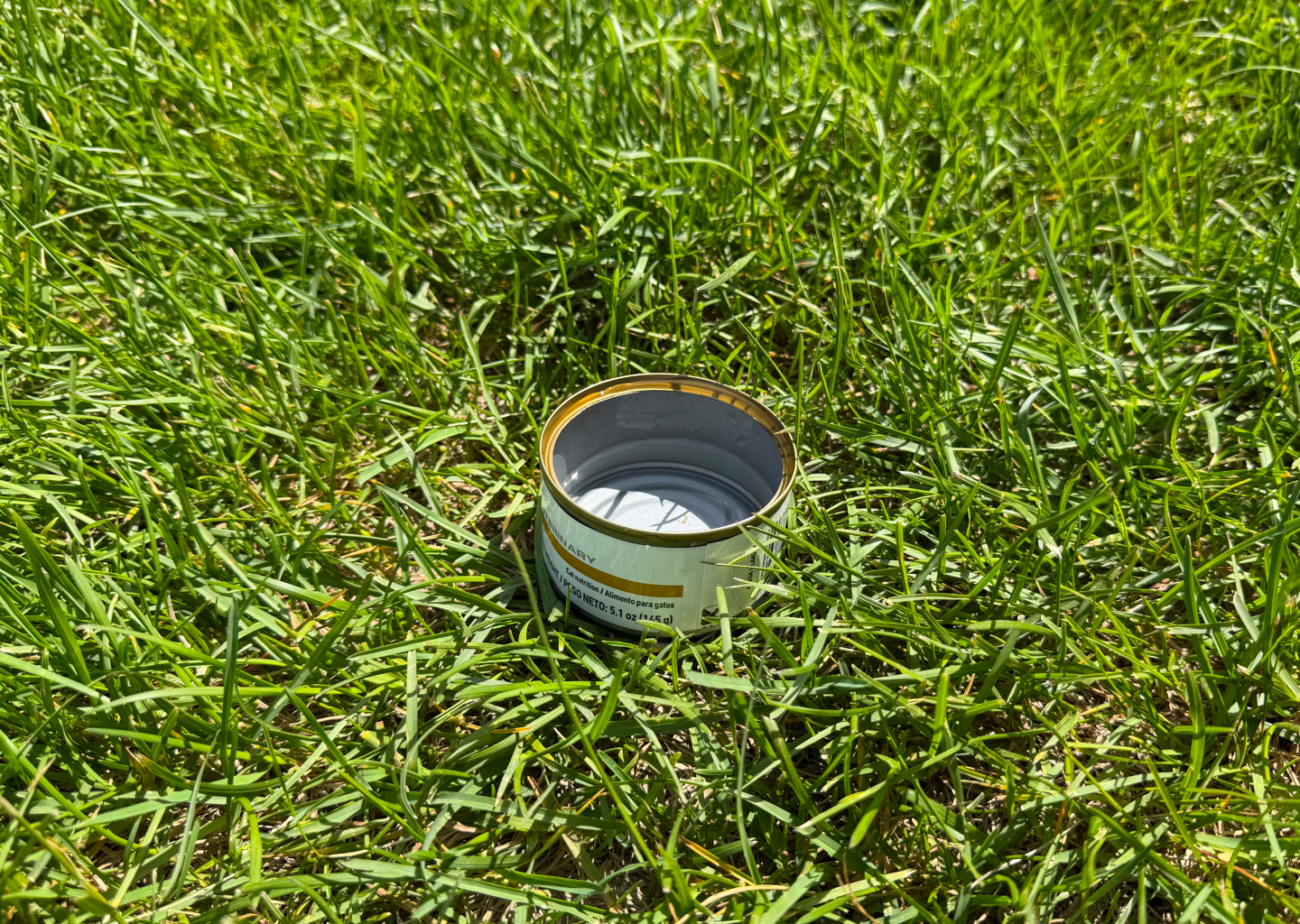
Do the tuna can test. Place shallow containers around the lawn during a cycle. If one fills twice as fast as another, coverage is uneven.
Skip when it rains. A rain sensor or weather-aware controller can cut 10–20% of summer waste on its own.
What new sod actually needs
New sod is the exception. For the first 10–14 days, it needs short, frequent runs — two or three times a day for 5–10 minutes — to keep the root zone moist while it knits in. After two weeks, frequency drops. By week three or four, the lawn shifts to a normal deep-water schedule. Most builder-default schedules don't make this shift automatically; a four-week calendar reminder prevents the most common cause of overwatered, fungus-prone new sod.
Where the technology matters
The schedule does some of the work; the hardware does the rest. Precision systems — Irrigreen among them — adjust each head's throw distance to match the lawn's actual shape, mapped in an app. Water lands inside the lines drawn around the lawn, not across them. For a new build, where the schedule hasn't hardened into bad habits, that's a clean starting point.
How installation typically works
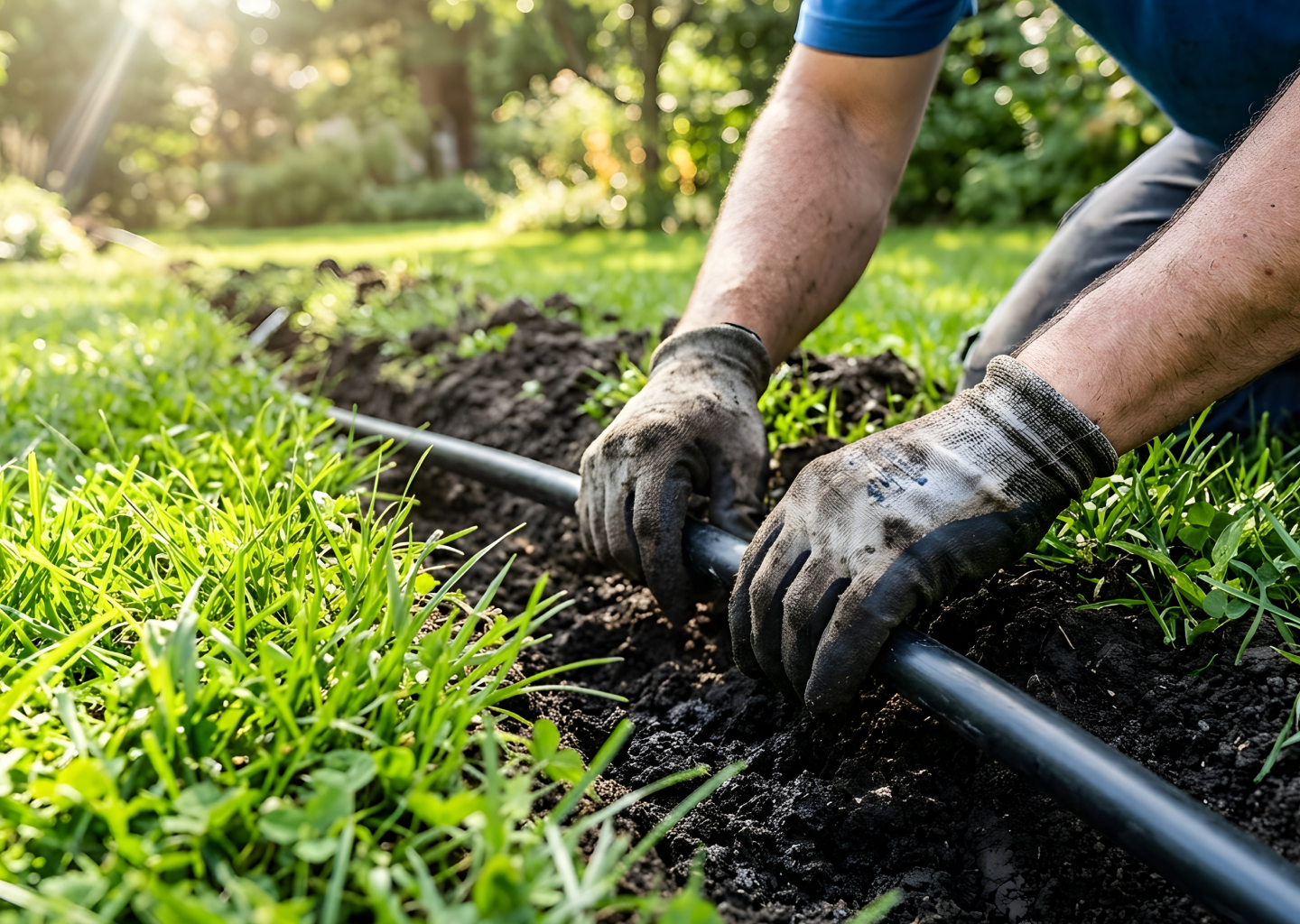
DIY. A weekend install is realistic on smaller new-build lots. Most of the time goes to trenching; the system itself runs on a single mainline and cable, with app-guided programming that calibrates your water pressure for even and precise coverage.
Certified installer. The default for larger yards or anyone working around fresh sod or an active landscaping contract. The installer designs to the actual yard, trenches cleanly around new beds, and walks the homeowner through the app at the end.
FAQs
How much water does a sprinkler system use per hour? For a single zone with traditional spray heads, 700–900 gallons per hour is typical. With Irrigreen, fewer heads cover more area per zone, so total runtime for the same coverage is usually shorter.
Is watering every day better for the lawn? Almost never, once the lawn is established. Two or three deep cycles a week produce a stronger lawn on less water — and Irrigreen's weather-aware scheduling holds that pattern automatically.
How can I tell if my sprinklers are wasting water? Look at the driveway, fence, and planted beds during a cycle. If they're wet, that water didn't go to the lawn. Irrigreen's mapped coverage was designed to eliminate that overspray.
Do smart controllers actually cut water use? They help — usually 10–20% from rain skips and seasonal adjustments — but controllers don't fix coverage. Irrigreen pairs smart scheduling with precision heads, so both the when and the where improve at once.
Can I cut my watering in half without killing the lawn? With a traditional system, usually not. Irrigreen is rated for up to 50% less water than a comparable traditional system, because the precision coverage and weather-aware scheduling remove waste at the source.
What's a reasonable water bill for a new sod lawn? The first 30 days run high because sod needs frequent shallow runs. After that, a well-designed system drops noticeably — Irrigreen homeowners often see the post-establishment bill come in lower than neighbors with traditional systems.
What time of day is most efficient? Between 4 and 9 a.m. Irrigreen's app defaults to that window.
A practical next step
The best time to right-size watering on a new build is before the builder-default schedule hardens into a habit. Start a design with the YardTrace™️ Tool to map coverage to the lot, or see more at Irrigreen.
TL;DR
- A typical in-ground sprinkler zone uses 12–15 gallons per minute — 7,000–10,000 gallons a week on an average lawn in peak summer.
- The EPA estimates up to half of outdoor water never reaches the lawn (evaporation, runoff, overspray).
- Biggest savings come from how you water, not how long: morning runs, deep-and-infrequent schedules, even coverage.
- New sod is the exception — frequent shallow runs for two weeks, then shift to a deep-water pattern.
- Precision systems like Irrigreen target water to the lawn's actual shape, removing most of the waste baked into traditional setups.
A new home with fresh sod usually arrives with a sprinkler schedule someone else set. The first water bill raises the obvious question: how much water do sprinklers use, and is this normal? Most homeowners run the system longer when something looks dry — almost always the wrong move.