
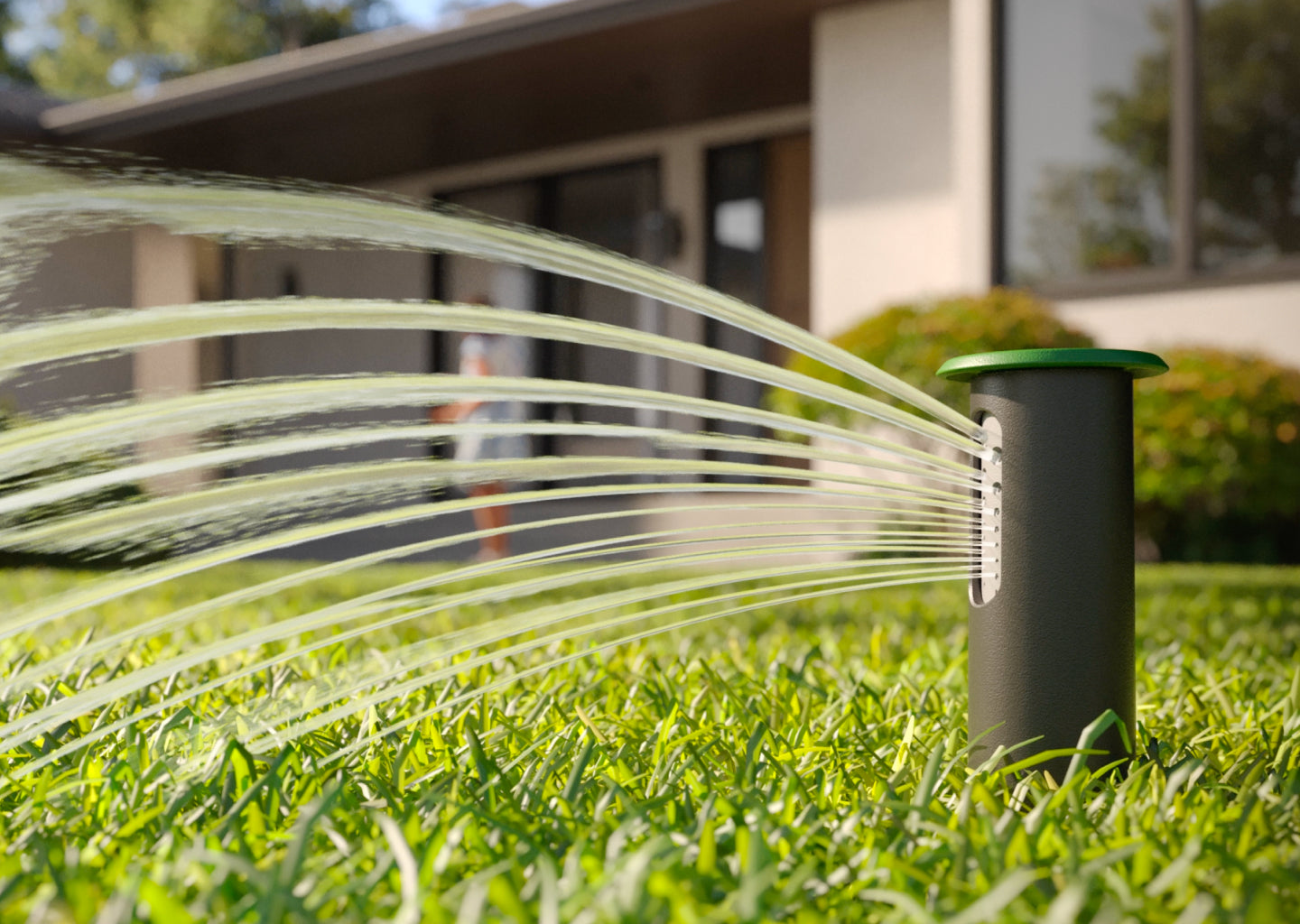
If your sprinklers miss spots, run during rain, or leave you guessing, you’re not alone. Most homeowners don’t want to become irrigation experts. They just want a yard that looks good without losing weekends to it.
This is the simple version of how in-ground irrigation works—and what “smart” should actually mean in real life.
 Why watering gets frustrating
Most yards don’t fail because the grass is “hard to grow.” They fail because watering becomes inconsistent.
A busy week hits. Travel happens. A heat spell shows up out of nowhere. The sprinklers keep doing what they were set to do weeks ago—whether your lawn needs it or not. That’s when you get:
- Dry patches along edges and corners
- Overwatered areas that turn soggy or thin
- “It looked fine yesterday” lawn surprises
- HOA pressure because it suddenly looks uneven
Traditional irrigation can work, but it often depends on you staying on top of it. And that’s the part nobody wants.
How in-ground systems work (in plain English)
An in-ground irrigation system is basically three parts working together:
1) Water lines + valves (the hidden plumbing)
Water runs through buried lines. Valves open and close to send water to different parts of your yard.
2) Zones (watering in sections)
Your yard is divided into “zones.” That’s because different areas need different watering:
- New sod vs. established lawn
- Full sun vs. shade
- Front yard vs. backyard
- Garden beds vs. turf
A well-designed system matches zones to real conditions—not just “front/back.” That’s how you avoid sprinklers missing spots or blasting water where it isn’t needed.
3) Controller (the brain)
This is where “smart” comes in.
A basic controller is just a timer. It waters on a schedule, whether your lawn needs it or not.
A smart controller should help the system adapt—so the yard stays even without constant babysitting.
What “smart” actually means (and what it doesn’t)
Smart doesn’t mean more buttons or more settings.
It should mean:
- Even coverage you can see (no dry corners, no random stripes)
- Simple control from your phone (change watering in seconds, from anywhere)
- Less waste (not watering sidewalks, not running during rain)
- Confidence it’s handled (especially during travel, busy weeks, or hot spells)
Smart should feel quiet. Like the system is working in the background—while you’re living in the yard.
How installation typically works (two paths)
Most homeowners assume irrigation is either “complicated” or “contractor-required.” In reality, you have options.
Path 1: DIY (weekend project)
If you’re comfortable with a weekend project, DIY can be straightforward with the right plan. Typically:
- You map the yard and zones
- Trench and run lines
- Install heads and connect valves
- Test, adjust, and bury
The key is a clear design so you don’t end up with coverage gaps.
Path 2: Certified installer
If you want it done fast, clean, and optimized:
- Installer confirms layout and zones
- They handle trenching, plumbing, and setup
- You get a system that’s tuned for your yard and water pressure
Either way, the goal is the same: a yard that stays green and even without constant adjustment.
Irrigreen’s approach: visible precision, without the fuss
A lot of irrigation brands lead with specs. Irrigreen is built around outcomes: a yard that feels cared for without you caring for it.
That means:
- Precision watering for even green (so you’re not chasing dry spots)
- Quiet control from your phone (simple, not technical)
- A system designed around real life—hosting, kids, dogs, travel, and hot spells
If you’re not ready to buy yet, that’s fine. The best first step is understanding what your yard actually needs.
TL;DR:
FAQs
Do I need an in-ground system, or can I just use hoses/sprinklers?
You can, but it takes time and consistency. In-ground systems are about getting results without the daily effort.
What’s the difference between a smart controller and a smart irrigation system?
A controller can be smart while coverage is still uneven. A smart system includes design + zone planning + consistent coverage.
Will it work during travel or unpredictable weather?
That’s the point of smart irrigation: fewer “set it and forget it” mistakes when conditions change.
Is smart irrigation worth the price?
It depends on how much you value time back, reliability, and curb appeal. Premium systems should reduce the need for constant tweaks and rewatering.
How do I know how many zones I need?
It’s based on yard size, sun/shade, slopes, beds vs. turf, and water pressure—not just square footage.
Will it help with dry spots?
If dry spots are caused by uneven coverage or bad zoning, yes. If the soil is compacted or the area is shaded heavily, you may need lawn care adjustments too.
Next step: Start a design
The easiest way to make this real—without guessing—is to start with a plan.
Start a design so you can see what a smart in-ground system would look like for your yard (zones, coverage, and setup), before you commit to anything.

