
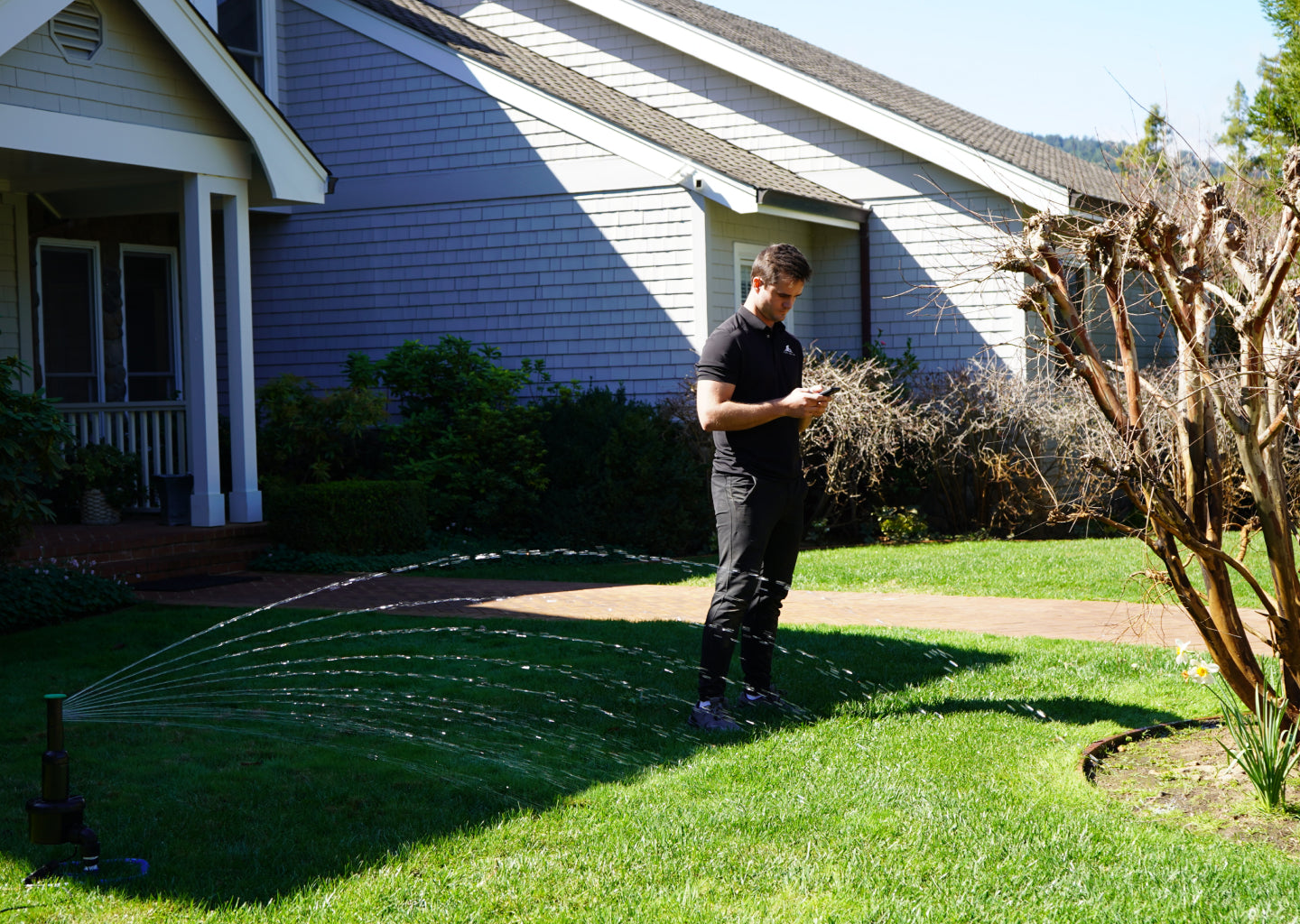
Spring Start-Up Checklist: Get Your Lawn Ready Without Spending Every Weekend Watering
Spring always starts the same way: one warm weekend and suddenly everyone’s outside. You want a lawn that looks fresh and even—not a yard that turns into a new weekly chore.
But if you’ve dealt with sprinklers missing spots, surprise dry patches, or that “are we watering too much?” feeling, spring can bring stress fast. This checklist is meant to make it simple—and keep your weekends yours.
The real problem: spring watering is easy to get wrong
Most lawns don’t struggle in spring because they’re “hard to grow.” They struggle because watering starts before anyone’s ready.
A few things happen at once:
- the ground is thawing and uneven
- rain is unpredictable
- you’re busy (sports schedules, travel, house projects)
- your sprinkler settings are still stuck in last year’s routine
So watering becomes guesswork. And guesswork creates two outcomes: overwatering (waste, soggy spots) or underwatering (dry corners that show up the minute a hot spell hits).
What to do instead: a spring start-up checklist that actually helps
You don’t need to become a lawn person. You just need a clean start.
Step 1: Walk the yard (10 minutes)
Before you touch settings, take one lap:
- Are there low spots holding water?
- Any areas that stayed thin last year?
- Are beds, sod areas, and lawn sections clearly different?
This helps you water intentionally instead of evenly watering everything “just in case.”
Step 2: Check coverage—not just that it turns on
Run your system (or turn on sprinklers manually) and watch for:
- heads that don’t pop up fully
- overspray onto driveway/sidewalk
- misting (often a sign of too much pressure or a damaged head)
- areas getting missed (edges, corners, side yards)
This is the moment most homeowners skip. It’s also the moment that prevents 80% of summer frustration.
Step 3: Start slower than you think
Spring temps are mild. The lawn needs less than it will in June.
A simple approach:
- begin with lighter watering
- adjust only if you see dry areas developing
- avoid “set it and forget it” schedules until weather stabilizes
If you’re installing new sod, treat it differently. Sod needs consistent moisture early on. Mature turf doesn’t.
Step 4: Adjust for real life (busy weeks happen)
The most common reason lawns get uneven isn’t knowledge. It’s inconsistency.
Plan for the reality:
- travel coming up
- weeks you’ll forget to adjust the timer
- rain followed by a sudden warm stretch
The best systems make these weeks feel handled, not stressful.
How installation typically works (two paths)
If your current setup is unreliable—or you’re still dragging hoses—spring is often when homeowners start considering in-ground irrigation.
Path 1: DIY (weekend install style)
DIY can be doable if you’re comfortable with a project and want to save on labor.
Typical steps:
- map the yard and zones
- trench and lay lines
- install heads/valves
- test and tune coverage
The biggest DIY risk isn’t effort. It’s layout. Poor coverage is what creates dry spots and constant tinkering.
Path 2: Certified installer
If you want it done cleanly and quickly:
- installer designs zones for your yard (sun/shade, beds, turf)
- installs and tests the system
- tunes it for even coverage
- This is the fastest path to a lawn that feels consistently “taken care of.”
Irrigreen’s approach: spring should feel calm
Irrigreen is built around a simple promise: your yard, always ready.
Not ready because you thought about it every week—ready because the system is designed for even results and easy control:
-
Visible precision: even coverage you can see
-
Quiet control: simple adjustments from your phone, no learning curve.
If spring is when you always end up “fixing” the yard, that’s a signal. The system isn’t supporting you.
TL;DR:
FAQs
When should I turn my sprinklers back on in spring?
Once the ground has thawed and you’re past hard freezes. If you’re unsure, start with a test run before full scheduling.
How do I know if I’m overwatering?
Soggy areas, fungus, pooling water, or consistently soft ground are common signs.
Why do dry spots show up even when I water?
Usually coverage gaps—corners, edges, and side yards often get missed.
Should I water more if we’re getting spring rain?
Not automatically. Spring rain can cover most needs. The goal is watering only when the yard actually needs it.
What if I’m not ready for a full system yet?
Start by understanding your yard layout and what a real zone plan would look like.
Is smart irrigation worth it in spring?
Spring is when smart matters most—because weather swings make fixed schedules unreliable.
Next step: Start a design
If you’re tired of guessing—especially once summer heat hits—the best next step is a plan that matches your yard.
Start a design to see what an in-ground system could look like for your space (zones, coverage, and layout), before you commit.


