
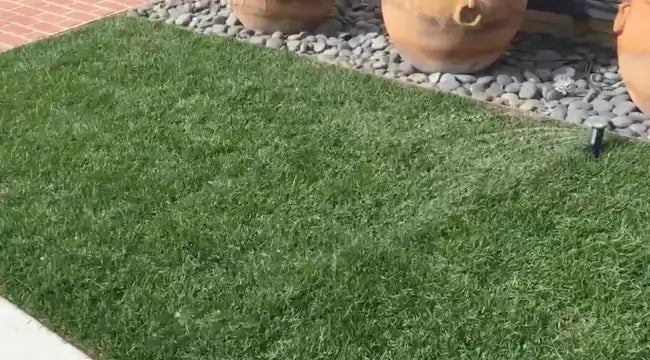
How to Fix Dry Spots and Overwatering: The Most Common Sprinkler Coverage Problems Explained
You can water “enough” and still end up with dry spots. You can water less and somehow make the lawn worse. And nothing makes a yard feel more annoying than sprinklers that run faithfully… while the grass looks uneven anyway.
If your system is missing corners, soaking one area, or leaving you guessing during hot spells, you’re not doing anything wrong. You’re dealing with coverage problems—and they’re fixable.
The real problem: most sprinkler systems water unevenly
Most homeowners assume irrigation is simple: turn it on, water goes everywhere, lawn stays green.
But sprinkler systems don’t water “everywhere.” They water specific patterns. And small issues in those patterns create big visual problems:
-
one side yard that always browns out
-
soggy patches near the driveway
-
stripes you can’t unsee
-
a brand-new sod section that looks stressed after one busy week
The frustrating part is the waste. When coverage is uneven, homeowners compensate by watering longer—which often makes the wet areas worse without fixing the dry ones.
What to do instead: diagnose coverage before changing your schedule
Before you touch your watering schedule, do this first:
Run your sprinklers for 3–5 minutes and watch.
It’s the fastest way to spot what’s really happening.
Here are the most common issues—and what they look like in real life.
1) “Head-to-head” gaps (the #1 cause of dry spots)
Sprinklers are designed to overlap. When they don’t, you get dry areas between heads—usually:
-
corners
-
edges along fences
-
narrow side yards
Fix: adjust placement/aim or add coverage.
Shortcut: if you can see a dry patch pattern repeating, it’s usually a spacing problem.
2) Misdirected spray (watering the wrong things)
If you see water hitting:
-
sidewalks
-
the driveway
-
the house
-
patio furniture
…your lawn isn’t getting what you’re paying for.
Fix: aim/rotate heads, adjust arc, or swap heads/nozzles.
This is one of the easiest fixes and one of the biggest “why didn’t I do this sooner?” moments.
3) Low pressure or clogged heads (weak throw, weird patterns)
This shows up as:
-
sprinklers that barely reach their intended area
-
misting instead of clean droplets
-
heads that don’t pop up all the way
Fix: clean/replace the head, check for leaks, confirm pressure is sufficient for the zone.
4) Mixed zones (watering shade like full sun)
If one zone includes:
-
sunny lawn
-
shaded lawn
-
garden beds
-
new sod
…you’re guaranteed to overwater something and underwater something else.
Fix: zone by conditions, not convenience.
5) Watering longer instead of watering smarter
Long run times often create:
-
runoff on slopes
-
mushy areas near low spots
-
shallow roots
Fix: shorter cycles, spaced out (especially during spring start-up and hot spells).
How installation typically works (two paths)
If your system has chronic coverage problems, it’s worth knowing: this isn’t always a “repair” issue. Sometimes it’s a design issue.
Path 1: DIY (weekend install style)
DIY can work well if you start with a real plan.
Typical steps:
-
map zones based on sun/shade + turf vs beds
-
trench and install lines/heads
-
test coverage and adjust
-
fine tune scheduling
DIY is often easiest when:
-
you’re installing before new sod
-
the yard is open and accessible
Path 2: Certified installer
An installer can:
-
correct zone layout
-
ensure even coverage (especially corners/edges)
-
tune the system so you aren’t compensating with longer watering
If your yard has slopes, complex landscaping, or persistent dry spots, this route can save a lot of trial-and-error.
Irrigreen’s approach: even coverage you can actually see
A lot of sprinkler systems are “working” but still leave you with dry spots and overwatering.
Irrigreen is built around visible precision—even coverage across the yard—so you’re not stuck managing problem areas all season.
And it’s built for quiet control: simple adjustments from your phone, especially when life changes (travel, new sod, heat spikes).
This is what premium irrigation should feel like: handled.
TL;DR:
FAQs
Why are my lawn edges always brown?
Edges and corners are the most commonly missed areas. It’s usually a spacing/aim issue, not a “grass” issue.
Can I fix dry spots by watering longer?
Sometimes, but it often makes wet areas worse. Fix coverage first, then fine tune timing.
How do I know if I’m overwatering?
Look for soggy soil, pooling, fungus, and consistently soft ground—even after dry weather.
Do smart controllers fix coverage issues?
Not by themselves. Smart scheduling can’t fix sprinklers that aren’t hitting the right areas.
What if I’m not ready to replace my system?
Start with diagnosis. A few adjustments can improve results quickly, and a design plan can show what an upgrade would change.
Should new sod be watered differently?
Yes. New sod needs more consistent moisture early on, and it should be zoned accordingly.
Next step: See how it works
If your sprinklers are leaving dry spots and overwatering other areas, it’s not a personal failure. It’s a coverage problem.
See how it works to understand what even watering actually looks like—and what changes when your system is designed for precision from the start.


