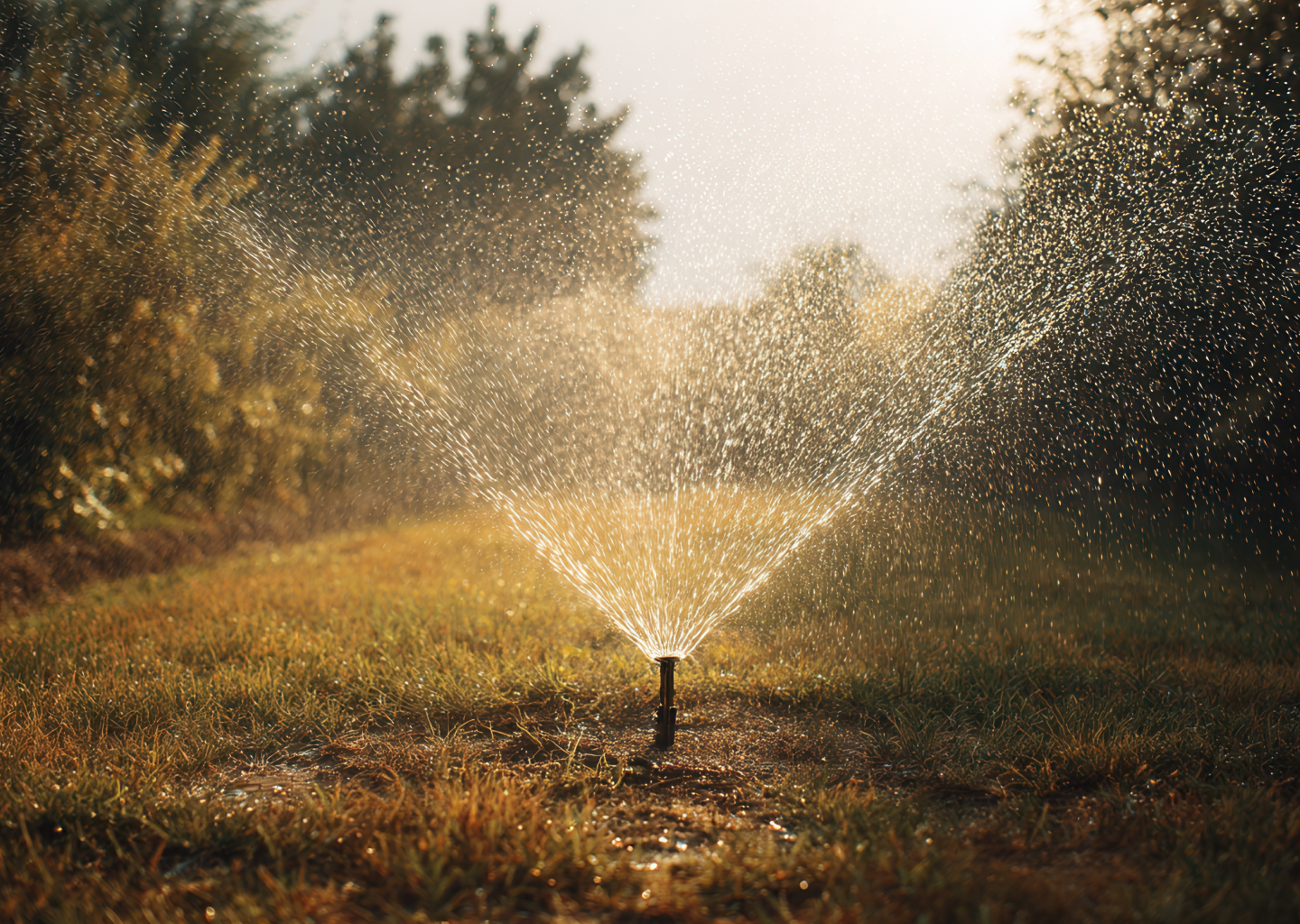
Memorial Day to Labor Day: The Set-It-and-Forget-It Summer Watering Plan
By the time Memorial Day weekend rolls around, most existing sprinkler systems are on their third or fourth schedule of the year — most of them set by guesswork. What follows is a summer watering schedule that holds up from late May through Labor Day, plus the rules that make it work without weekly fiddling.
The summer watering schedule, at a glance
| Period | Approx. dates | Frequency | Time of day | Notes |
|---|---|---|---|---|
| Pre-season startup | Late May | 1–2 deep cycles | 5–8 a.m. | Test every zone; set baseline; reseed weak spots |
| Early summer | June | 2 deep cycles/week | 4–8 a.m. | Watch for first dry spots; raise runtime if heat arrives early |
| Peak summer | July to mid-August | 2–3 deep cycles/week | 4–7 a.m. | Cycle-and-soak on slopes; skip 24 hours after rain |
| Late summer | Mid-August to Labor Day | 2 deep cycles/week | 5–8 a.m. | Scale back as nights cool |
The frequencies above assume an established lawn. New sod runs on a different (much more frequent, much shallower) schedule for its first 2–4 weeks.
Five rules that do most of the work
Deep, not daily. Two or three longer cycles a week outperform daily shallow runs. Roots follow water down, and a deeper root system needs less water overall.
Morning, every time. A 4–8 a.m. start loses the least water to evaporation and wind. Evening watering leaves grass wet overnight, which invites fungus.
Skip after rain. A rain sensor or weather-aware controller handles this automatically. Without one, skipping the next cycle after a soaking rain saves more water than any other single adjustment.
Cycle and soak on slopes and clay. Water that runs off doesn't water anything. Split a cycle into two or three short runs separated by 30–60 minutes of absorption time.
Walk the yard once a week. During a morning cycle, follow the spray pattern. Dry corners, overspray on the driveway, or one zone running long after the others usually means something needs adjustment.
What actually changes through the season
The summer watering schedule isn't one number — it's a slow drift. From Memorial Day through mid-June, most lawns need less water than people think; spring rain and cooler nights are still doing real work. From mid-June through mid-July, demand climbs. The hottest stretch — usually late July through the first two weeks of August — is when most homeowners over-correct, adding daily runs that produce shallow roots and higher bills. By the last weeks of August, cooler nights start reducing demand again, and the right move is to scale back before Labor Day rather than ride peak-summer settings into fall.
Where "set it and forget it" actually works
Set-and-forget only delivers when the coverage underneath is even. A traditional system depends on overlap between fixed-arc heads to fill in coverage; when that overlap drifts — heads sink, nozzles wear, pressure shifts — the homeowner is back to mid-season tinkering to chase dry spots.
Precision systems like Irrigreen are built around the opposite assumption: each head adjusts its throw distance to the actual shape of the lawn, mapped in the app. A summer watering schedule built on that foundation can hold for a full season because the where doesn't drift. The EPA's WaterSense program estimates up to half of outdoor water is wasted on inefficient systems — the savings show up first in setups that don't need to overwater good zones to keep weak ones green.
DIY vs certified installer
For anyone thinking about replacing a tired system before the summer ends, two paths.
DIY. A weekend install is realistic on smaller lots and established lawns where an old system is being retired. The app handles mapping and testing.
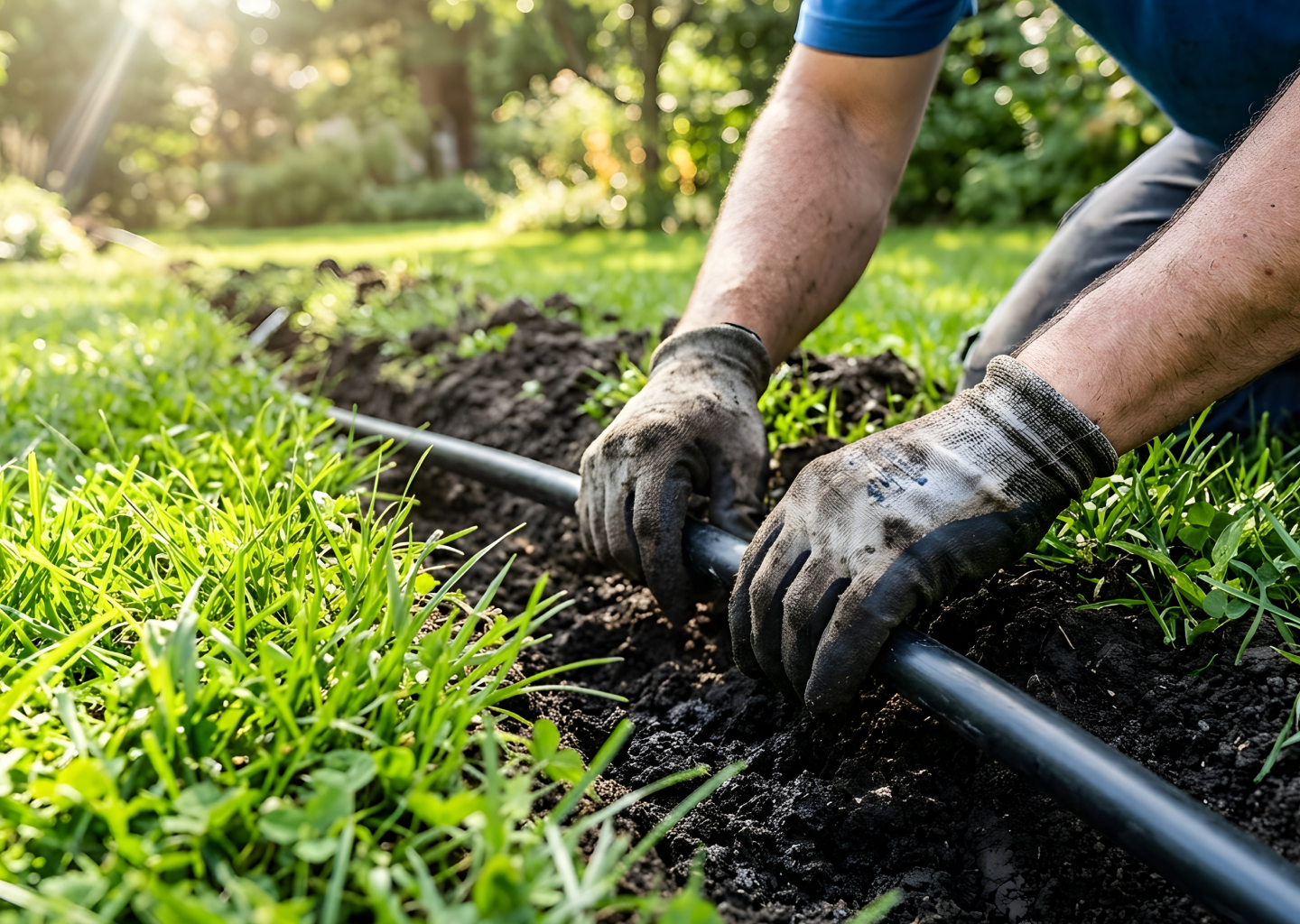
Certified installer. The default for larger yards, irregular grades, or coordinating around landscapers. The installer designs to the yard, handles trenching cleanly, and walks the homeowner through the new app and schedule.
FAQs
What's the ideal summer watering schedule for an established lawn? Two to three deep cycles per week, between 4 and 8 a.m., totaling about one inch of water (rain included). Irrigreen automates the rain skips and seasonal adjustments, so the schedule stays steady without weekly tweaks.
Should I water more during a heat wave? Make runs slightly longer, not more frequent. Adding minutes to each cycle keeps roots growing deep; switching to daily runs trains them to stay shallow. Irrigreen's app applies a heat-wave adjustment automatically, so the underlying pattern doesn't change.
How do I know if I'm overwatering? Soggy spots, mushrooms, fungus, and runoff onto the driveway are the visible signs. The most common cause is a schedule that overwaters healthy zones to keep dry corners alive — Irrigreen's mapped coverage prevents those dry spots, and waters every square inch evenly.
What time of day is best? Between 4 and 8 a.m. Cooler air, lower wind, less evaporation, and grass dries before fungus can take hold. Irrigreen's app defaults to that window.
Do I need a different schedule for warm-season vs. cool-season grass? Slightly. Warm-season grasses (Bermuda, zoysia, St. Augustine) usually need less per cycle than cool-season grasses (Kentucky bluegrass, fescue, ryegrass). Irrigreen's setup asks for grass type and adjusts the baseline.
Is it okay to skip watering entirely some weeks? Yes — after meaningful rain, an established lawn can skip the next cycle (or two) without harm. Irrigreen's weather-aware scheduling does this automatically.
When should I start scaling back for fall? Mid- to late-August, depending on region. As nights cool and dew increases, demand drops fast. Irrigreen's seasonal adjustment ramps the schedule down without manual intervention.
A practical next step
If the existing system has spent more time being adjusted than being trusted, the issue is usually under the lawn, not on the controller. See it in action on the Irrigreen System page for what set-and-forget actually looks like across a full summer.
TL;DR
- A solid summer watering schedule runs 2–3 deep cycles a week, between 4 and 8 a.m., adjusted up slightly during heat waves and skipped after rain.
- About one inch of water a week (rain included) keeps most established lawns healthy through the Memorial-Day-to-Labor-Day stretch.
- Five rules — deep not daily, morning runs, skip the rain, cycle and soak on slopes, weekly walk — do most of the work.
- "Set it and forget it" only holds when coverage is even underneath; uneven systems need constant tinkering to chase dry spots.
- A precision system like Irrigreen runs the schedule automatically, with weather skips and per-zone mapping built in.