Heat Wave Watering: How to Keep Grass Green Without Overwatering (Warm vs Cold States)
A five-day stretch of 95°F changes everything about how a lawn handles water. The default schedule that worked in June stops holding. Brown spots show up faster than they should. Most homeowners respond by adding daily runs — which fixes nothing and trains roots to stay shallow. How often to water lawn in heat depends on which kind of grass is in the yard.
When a hot stretch becomes a heat wave
For most northern lawns, three consecutive days at or above 90°F is the threshold where watering needs change. In warm-season climates where 90°F is a normal July afternoon, the threshold is usually 95°F or higher for several days. The National Weather Service uses similar definitions for issuing heat advisories.
Below that threshold, the standard summer schedule is usually fine. Above it, evapotranspiration spikes and the root zone dries faster than rain or irrigation can replace, especially in shallow-rooted lawns.
Cool-season vs warm-season grass
The two main grass families respond to heat differently.
Cool-season grasses — Kentucky bluegrass, fescue, ryegrass — dominate north of roughly the 37th parallel (Virginia, Missouri, Colorado, Northern California). They grow best at 60–75°F and slow down or go dormant in extended heat. A dormant cool-season lawn turns yellow but recovers when temperatures drop; pushing more water through it during dormancy mostly wastes water.
Warm-season grasses — Bermuda, zoysia, St. Augustine, centipede — dominate the South and Sun Belt. They grow best at 80–95°F and actually thrive during heat waves, but they need enough water to keep up with rapid growth.
The watering response is opposite for each family: cool-season lawns need slightly more water to slow dormancy; warm-season lawns need slightly more to support growth. Neither benefits from daily shallow runs.
How often to water lawn in heat: a quick-reference table
| Climate / grass type | Base summer | During heat wave | Time of day |
|---|---|---|---|
| Cool-season (north) | 2 deep cycles/week, ~1 inch total | Add 1 cycle, or extend runtimes ~30% | 4–8 a.m. |
| Warm-season (south) | 2–3 cycles/week, ~0.75–1 inch total | Shift to 3 cycles, extend runtimes | 4–7 a.m. |
| New sod (any region) | 2–3 shallow cycles daily | Same — sod can't take heat-wave bumps | 4–9 a.m., short cycles |
| Slopes / compacted soil | Cycle-and-soak schedule | Cycle-and-soak with shorter cycles | 4–8 a.m. |
The principle behind every row: extend runtimes before adding frequency.
Signs you're over- or under-watering
Two quick checks during a heat wave:
Footprint test. Walk across the lawn. If footprints stay visible for an hour or more, the grass is stressed and needs water. If they spring back immediately, the root zone is hydrated.
Color check. A blue-gray cast in the morning means the lawn is on the edge of dehydration. Bright green that feels squishy underfoot means too much water.
Overwatering during heat is more common than people think — mushrooms or fungus in shaded areas, standing water 30+ minutes after a cycle, soft soggy ground, sudden yellow patches in low spots (root rot, not heat stress).
Underwatering shows up as blue-gray color (especially in afternoon), crunchy or straw-like patches, footprints lasting an hour or more, and cracks in the soil.
Where smart irrigation changes the math during heat
Heat waves are where the difference between a smart system and a traditional one shows up fastest. Three features matter most:
Automatic heat-wave adjustments. Weather-aware scheduling extends runtimes and adds cycles based on the forecast — without manual intervention.
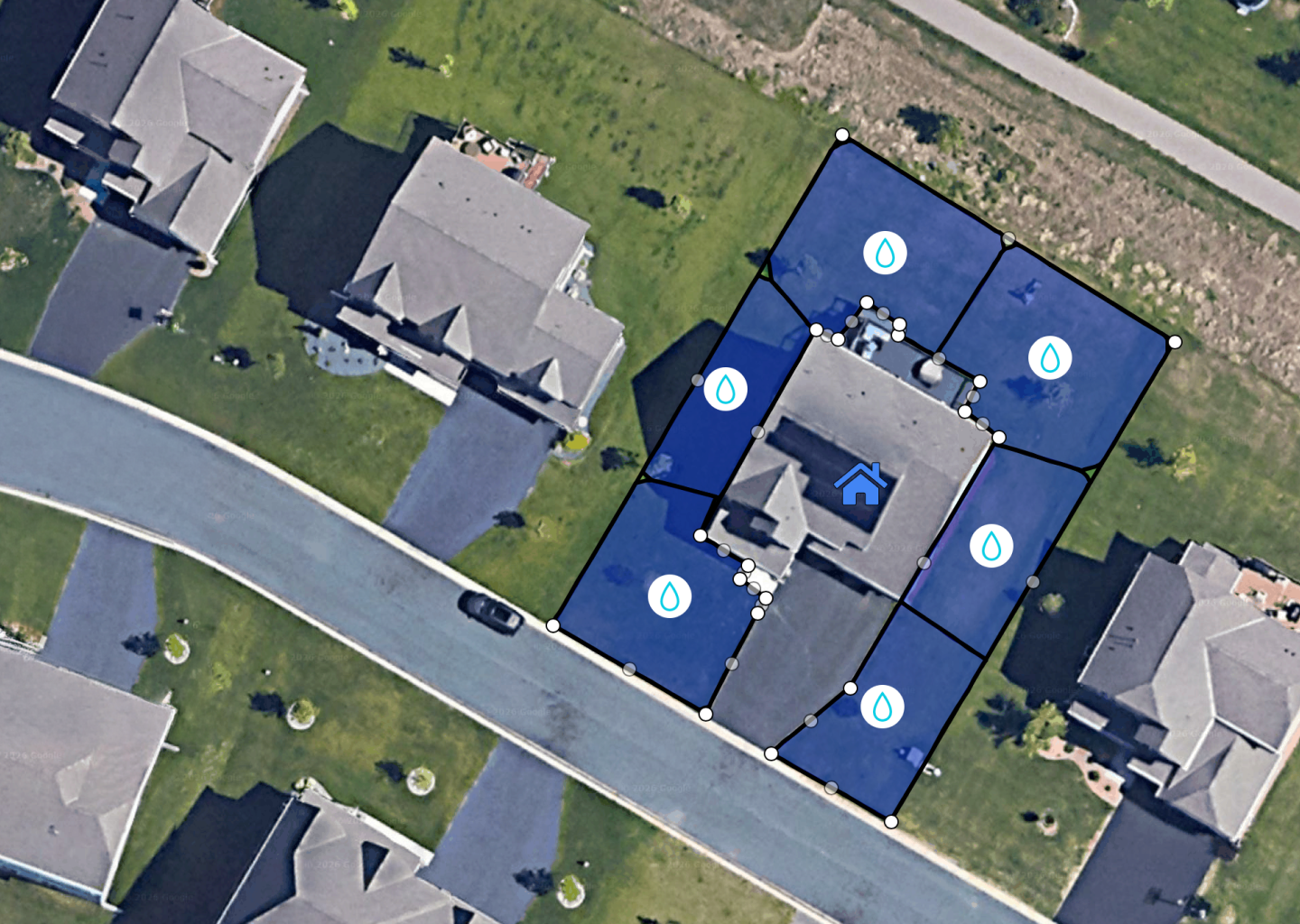
Per-zone runtime. A system like Irrigreen can extend a hot, sunny zone separately from a shaded one, so the schedule doesn't overwater the cooler parts of the yard to keep the hot zones alive.
Ramping back down. Once temperatures drop, weather-aware scheduling automatically returns to baseline. A traditional schedule set for a heat wave often keeps running heat-wave settings into mid-September.
The EPA's WaterSense program notes that weather-based controllers reduce outdoor water use significantly versus fixed-schedule systems, with the biggest savings during weather extremes.
DIY vs certified installer
DIY. A weekend install is realistic for smaller lots with simple geometry. The app walks through mapping, head testing, and an initial weather-aware schedule.
Certified installer. The default path for larger yards, irregular grades, or anyone coordinating around new sod or fresh landscaping. The installer designs the layout, handles trenching, and verifies the system meets local watering rules at handoff.
FAQs
How often to water lawn in heat for cool-season grass? Two deep cycles per week as a base, bumping to three during a 3+ day stretch above 90°F. Irrigreen's weather-aware scheduling applies the extra cycle automatically without locking it in permanently.
How often to water lawn in heat for warm-season grass? Two to three deep cycles per week, with extended runtimes during peak heat. Warm-season grasses grow fast and need water to support that, but daily shallow runs still cause more harm than good. Irrigreen sets the baseline by grass type at install.
Is it okay to let a cool-season lawn go dormant in heat? Yes — it's the healthier response for the grass. A dormant Kentucky bluegrass or fescue lawn turns yellow but greens up when temperatures drop. Pushing more water during dormancy wastes water and can promote disease. Irrigreen's app supports a dormancy-friendly schedule that keeps light watering without forcing green growth.
Should I water at night during a heat wave? No. Night watering keeps grass wet too long and invites fungus. Stick with 4–8 a.m., which Irrigreen's app defaults to.
Will adding a heat-wave cycle put me over local drought restrictions? Possibly. Local rules don't always lift during heat waves. Irrigreen's per-zone scheduling adds runtime without exceeding day-of-week or runtime caps.
How do I know the heat wave is actually over? Three to four consecutive days back in normal range. Irrigreen's weather-aware scheduling ramps back down automatically.
Does new sod need a different heat-wave plan? Yes. Sod in its first 30 days runs on a shallow-and-frequent schedule and shouldn't follow established-lawn rules. Irrigreen keeps new-sod schedules separate from the main lawn until established.
A practical next step
How often to water lawn in heat is one of the hardest summer questions to answer without watching a specific yard week to week. See it in action on the Irrigreen System page for how weather-aware scheduling handles the transition automatically.