Why Your Sprinklers Water When It Rains (and How Smart Scheduling Prevents It)
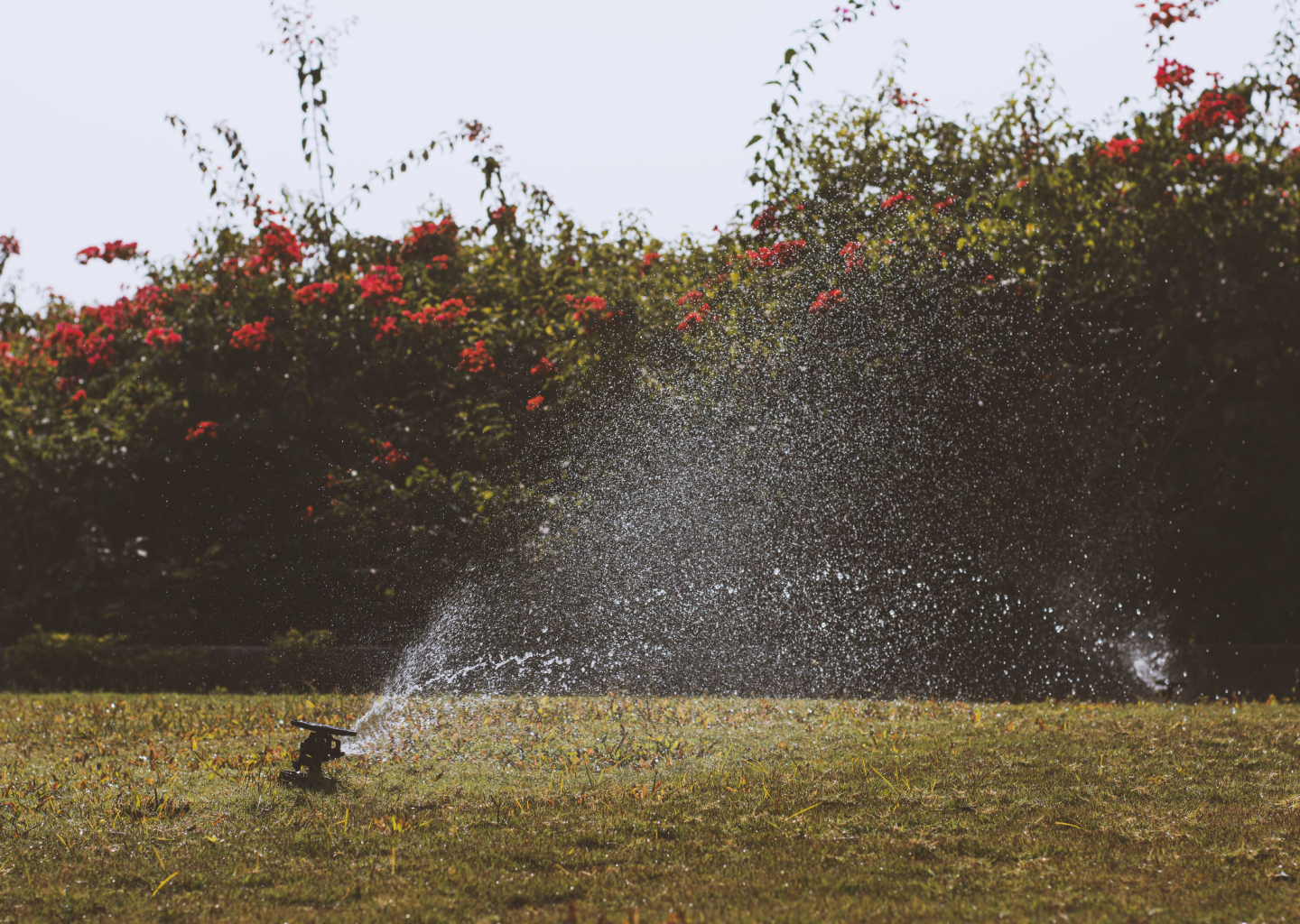
The driveway is wet, the patio is wet, the dog refused to go outside, and the sprinklers are running anyway. Sprinklers watering after rain is one of the most common frustrations homeowners have with irrigation — and one of the most fixable. The cause is almost always one of a few specific things, and most of them aren't the system being "broken."
Why sprinklers water after rain
Five common reasons:
The controller has no rain awareness at all. Traditional timer-only systems run on a fixed schedule with no weather input. The controller doesn't know it rained.
The rain sensor is broken or stuck. Many systems have a sensor — usually a small cup that absorbs rainfall and expands to interrupt the schedule. After a few years, the cup gets brittle, the wiring corrodes, or the sensor is buried under debris. The system runs as if nothing changed.
The rain sensor threshold is set too high. Many sensors have an adjustable trigger (1/4 inch, 1/2 inch, 1 inch of accumulated rain before skip). If it's set to 1 inch and the storm dropped 0.6 inches, the system runs anyway.
The system ran before the rain arrived. A 5 a.m. cycle finishes by 7. Rain starts at 9. The lawn ends up double-watered before anyone notices.
The smart controller isn't really checking the forecast. Some Wi-Fi controllers only use a local sensor; others check the forecast only at midnight, missing real-time changes.
Each is a different fix, but they all add up to the same observable problem: sprinklers watering after rain.
The rain sensor problem
The most common attempted fix — installing or replacing a rain sensor — solves part of the problem but rarely all of it. A sensor only knows what's happening right now, not what's about to happen. A storm that drops half an inch over six hours might never trip a sensor with a 1/2-inch threshold. And by the time a sensor does trip, the morning run has often already finished.
Rain sensors also fail quietly. Most homeowners don't notice the failure until the system has been running through rain for weeks. There's no light, no alert, no app notification — just a dead sensor and a wet driveway.
What smart scheduling actually does
Weather-aware smart scheduling solves the sensor problem by replacing it with forecast data and live weather feeds. Three differences from a traditional setup:
It uses the forecast, not just real-time conditions. A smart schedule that sees rain forecast for tomorrow morning can skip tonight's cycle in advance. A traditional sensor can only react after the rain starts.
It uses cumulative rainfall, not all-or-nothing thresholds. A smart system tracks how much rain the lawn has actually received over the past few days and adjusts runtimes accordingly, instead of skipping or running on a single threshold.
It reports what it skipped and why. A homeowner can open the app and see which cycles were skipped, which were shortened, and which ran normally — making it obvious when something is off.
The EPA's WaterSense program estimates weather-based controllers reduce outdoor water use significantly compared to fixed-schedule systems, with the largest savings coming from rain skips and seasonal adjustments.
How to fix sprinklers watering after rain
The right fix depends on what's installed today.
Manual override (temporary). Every system supports a one-time rain delay. Works for the next 24–48 hours but doesn't solve the underlying problem.
Add or replace a rain sensor. A working sensor is better than none, but it's a partial fix — it only reacts to live conditions, not the forecast.
Upgrade the controller. A Wi-Fi-enabled smart controller with weather data integration is a meaningful step up from a fixed-timer setup. The schedule starts checking the forecast.
Switch to a precision system. A system that pairs weather-aware scheduling with per-zone control — Irrigreen, for example — handles the rain question automatically and removes the most common reasons sprinklers waste water during wet stretches.
DIY vs certified installer
DIY. Smaller lots and simpler geometry. Homeowners comfortable mapping zones in an app can usually handle the install in a weekend.
Certified installer. Larger yards, irregular grades, or anyone coordinating around landscaping. The installer handles design, trenching, and walk-through.
FAQs
Why are my sprinklers watering after rain? The most common reasons: a fixed-timer controller with no weather awareness, a broken or buried rain sensor, a threshold set too high to trip on light rain, or a smart controller that only checks weather once a day. Irrigreen's system uses live weather and forecast data continuously, which removes most of these failure modes.
How does a smart sprinkler system know to skip a cycle? Smart systems pull live weather feeds and local forecasts, then compare against per-zone rules (grass type, soil, slope). Irrigreen's weather-aware scheduling skips, shortens, or runs cycles based on actual conditions and the forecast.
Will a rain sensor alone fix this? Partially. A working sensor catches active rain but not incoming rain, and can fail without warning. Irrigreen replaces the single-point sensor with continuous weather monitoring at the controller level.
How much water does running in the rain actually waste? A typical zone uses 700–900 gallons per hour. A few unnecessary cycles in a wet stretch can run into thousands of gallons over a single summer. Irrigreen's app shows which cycles ran, which were skipped, and the gallons saved.
Can I just unplug the system when it rains? Manually, yes — but most homeowners forget, and unplugging resets schedules on some models. Irrigreen's rain skip happens automatically without affecting the underlying schedule.
Why does my smart controller still run in the rain sometimes? Usually weather data lag, a forecast that missed the storm, or a misconfigured threshold. Irrigreen's app shows the forecast and the reasoning behind each decision, so the rare misfire is easy to diagnose.
Will switching to a smart system pay for itself? For most homeowners in regions with regular summer rain, yes — through avoided rain-watering alone. Irrigreen homeowners often see noticeable water-bill reductions in their first full summer.
A practical next step
The fastest way to stop sprinklers watering after rain is a system reading the forecast instead of waiting for a sensor to trip. [Start a design] with the YardTrace™ Tool to map a smart system to your yard, or see how weather-aware scheduling works at Irrigreen.