Why Even Coverage Matters More Than "More Water" (And How to Spot the Gaps)
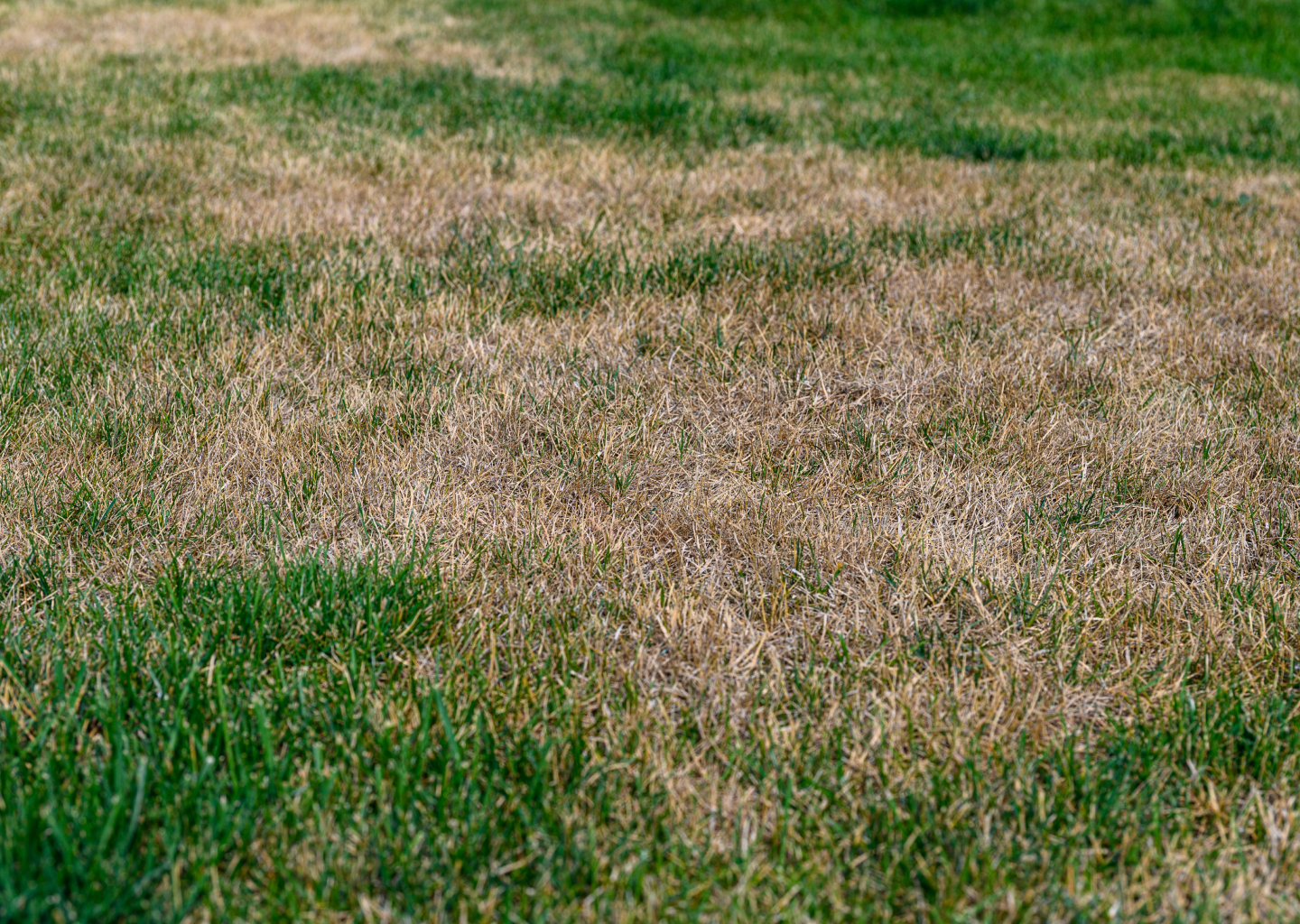
A lawn that's brown in patches while the rest looks fine usually isn't thirsty. It's unevenly watered. Most homeowners respond by adding minutes to the schedule, which fixes nothing and quietly doubles the water bill. The real problem sits underneath the schedule itself.
The trouble with "just water more"
Conventional sprinkler systems are designed around overlap. Rotors and spray heads throw water in fixed arcs, and the spaces between heads are supposed to fill in because the same ground gets hit twice, sometimes three times. When that overlap breaks down — because heads have shifted, pressure has dropped, a corner is awkward, or the original layout was off by a few feet — you end up with a dry ring or a brown stripe that no amount of extra runtime will fix.
Adding minutes to the schedule simply over-irrigates the spots that were already getting water. The extra water runs off the slope, pools in the low spots, leaches past the root zone, and shows up on the bill. The dry patch stays dry.
This is the tradeoff most homeowners miss: a lawn doesn't need more water. It needs water delivered evenly. The industry term is distribution uniformity — a measure of how consistently water lands across an irrigated area. The EPA's WaterSense program identifies low distribution uniformity as one of the most common causes of both lawn stress and household water waste.
How to spot coverage gaps in your yard
You don't need a soil probe. Coverage problems leave visible clues if you know where to look.
- Watch a full cycle. Stand at the edge of the lawn while the system runs and follow the spray from each head. Wherever two patterns don't meet — or one is throwing short of where it should — mark it.
- Look for ring patterns. A circle of darker, healthier grass around a head that fades to lighter grass at the edges means that head is doing most of the work for its zone.
- Check the corners and edges. Sharp corners, narrow strips along a driveway, and the curve next to a garden bed are where conventional heads almost always come up short.
- Notice the difference between dry and stressed. Stressed grass turns blue-gray and footprints stay visible for an hour after walking on it. Truly dry grass turns straw-colored and crunchy. The first is fixable with even watering. The second is recovering.
- The tuna can test. Set a few shallow, straight-sided containers — tuna cans work — across the lawn during a normal cycle. If one fills twice as fast as another, the coverage is uneven, full stop.
A quick walk during a morning cycle, plus the can test once a season, will tell you more than any controller setting.
What changes when coverage is even
When water lands consistently across a yard, two things happen at once. The visibly dry spots green up because they're finally being irrigated. And the soggy, over-watered spots dry out because the schedule no longer needs to compensate for bad coverage. The whole lawn settles into the same color and the same feel underfoot. Runtime often drops too, because the system isn't being asked to overwater eighty percent of the yard to keep the worst twenty percent alive.
This is the difference between watering a lawn and watering a problem.
Where Irrigreen approaches coverage differently
Where conventional systems work in fixed arcs and depend on overlap, the Irrigreen smart sprinkler head rotates a full 360 degrees and adjusts how far it throws at every angle. The yard is mapped in the app, edge by edge, and each head waters to the shape of the lawn it sees. There's no overlap to maintain and no fixed pattern to misalign. Corners and odd-shaped beds become a matter of geometry, not luck.
The practical effect is fewer dry rings, less overspray onto the driveway, and a schedule that doesn't have to overcompensate. Coverage you can see, not coverage you hope for. More on the hardware on the Smart In-Ground Sprinkler System page.
How installation typically works
There are two paths; both are fast and easy.
DIY. A weekend install is realistic for a smaller yard. The app walks through head placement, mapping, and a guided test that confirms each head is reaching the lines you drew. Trenching is the part that takes time; the system itself runs on a single mainline and a single cable, which is why it's possible to do this without a crew.
Certified installer. A pro install is the default for larger yards, new builds, and anyone who'd rather hand it off. A certified installer designs the layout, handles the trench, sets up the controller, and walks the homeowner through the app at the end. Most homeowners going this route are working around new sod, fresh landscaping, or an HOA timeline, and want it done cleanly the first time.
The right path depends on yard size, comfort with light excavation, and how much project the homeowner wants on the calendar.
TL;DR
- A patchy lawn is usually an uneven-watering problem, not a thirsty-lawn problem.
- Adding minutes to the schedule over-waters the healthy parts of the yard without fixing the dry ones.
- Coverage is a hardware question — fixed-arc sprinklers depend on overlap that breaks down over time, and no controller upgrade can close that gap.
- A five-minute walk during a watering cycle, plus the tuna can test, will surface most coverage issues.
- Systems that adjust at the head — like Irrigreen — solve coverage at the layer where it actually breaks.
FAQs
Will more watering time fix dry spots? Usually not. If a spot is dry because no sprinkler reaches it, more runtime only over-waters everywhere else. The fix is coverage, not duration — which is what Irrigreen is built around: each head adjusts its throw distance across a full 360° to match the actual shape of the lawn, so the dry corners get water without flooding the rest.
How often should I check my coverage? On a traditional system, three quick walks a year — spring start-up, mid-summer, and before winterizing — will catch most problems. On an Irrigreen system, the controller and app surface low pressure, leaks, and abnormal flow on their own, so the seasonal walk becomes more of a confirmation than a diagnostic.
Can I just adjust my existing heads? Sometimes. Rotating a head, swapping a nozzle, or raising a sunken riser can recover small gaps. But if the original plan put heads too far apart, no amount of tuning closes that distance. With Irrigreen, one mapped head covers an area that would normally take six to ten traditional heads, so the layout is built around the lawn itself rather than fixed arc spacing.
Does smart irrigation always mean better coverage? No. A smart controller schedules watering more intelligently, but if the heads underneath leave gaps, the schedule isn't the problem. Coverage is a hardware question first, software second. Systems that adjust at the head — like the Irrigreen Smart In-Ground Sprinkler System 3 — address coverage at that layer, while a controller upgrade alone leaves the underlying pattern unchanged.
Will even coverage actually lower my water bill? For most homeowners, yes. When coverage is even and the schedule isn't compensating for dry spots, the system uses less water to keep the lawn looking the same. Irrigreen's precision mapping removes most of the overspray onto driveways and beds, and weather-aware scheduling skips runs when rain is on the way — actual savings depend on lawn size, climate, and how poor the original coverage was.
How disruptive is install on an established lawn? Less than most homeowners expect with Irrigreen. Because one mapped head covers what six to ten traditional heads would, there's a single 1-inch mainline and a single cable run — far less trenching than a conventional retrofit. Most established lawns recover in a couple of weeks rather than a full season.
Is this only for big lawns? The opposite, often. Smaller yards benefit more from Irrigreen than larger ones, because awkward corners and narrow strips along driveways and beds are exactly where conventional coverage fails hardest — and exactly what mapped, per-angle adjustment is built to handle.
More questions? Catch up on our latest Reddit AMA.
A practical next step
If patchy results have been the pattern in the yard, the most useful next step isn't a new schedule. It's a closer look at how water is actually landing. See it in action on our How it Works page, or start with the YardTrace Tool for a sense of how coverage would map onto your specific lawn.